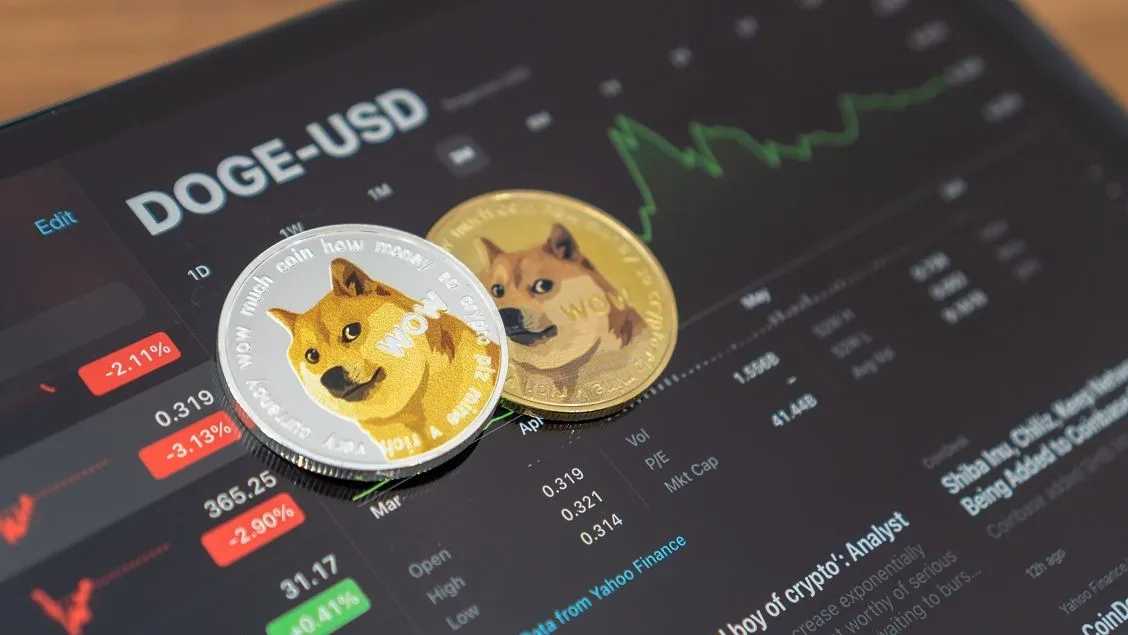
What do a dog meme, billionaire Elon Musk, and a cryptocurrency with a market capitalization of tens of billions of dollars have in common? Exactly — Dogecoin (DOGE), a coin that started as a joke and turned into one of the most talked-about crypto assets on the planet. In this article, the Crypto Insite editorial team takes an in-depth look at the Dogecoin phenomenon: from its creation story to the current price and forecasts for 2026. We explain why a coin featuring a Shiba Inu dog on its logo managed to win the hearts of millions of users and become a serious player in the crypto market despite its meme origins. We break down the project’s technical fundamentals, tokenomics, real-world use cases for DOGE, and answer the most common questions from beginners. As of early 2026, Dogecoin is trading around $0.15, showing a V-shaped recovery after a market correction.
The cryptocurrency market is full of surprises, but the story of Dogecoin stands apart. Created in 2013 as a parody of Bitcoin, the coin is now among the top 10 cryptocurrencies by market capitalization, which exceeds $25 billion. The DOGE community includes over 6 million wallets and around 2.7 million active members on Reddit alone. Institutional investors have already allocated more than $600 million to Dogecoin, while the probability of a DOGE-based ETF approval is estimated at 60–70% by the end of 2026. In this article, we dive into every aspect of the project — from blockchain architecture and mining to trading strategies and long-term growth prospects. You will learn where to buy DOGE, how to use it, and why this “meme coin” continues to attract both retail investors and major market players. Ready to understand the Dogecoin phenomenon? Let’s get started!
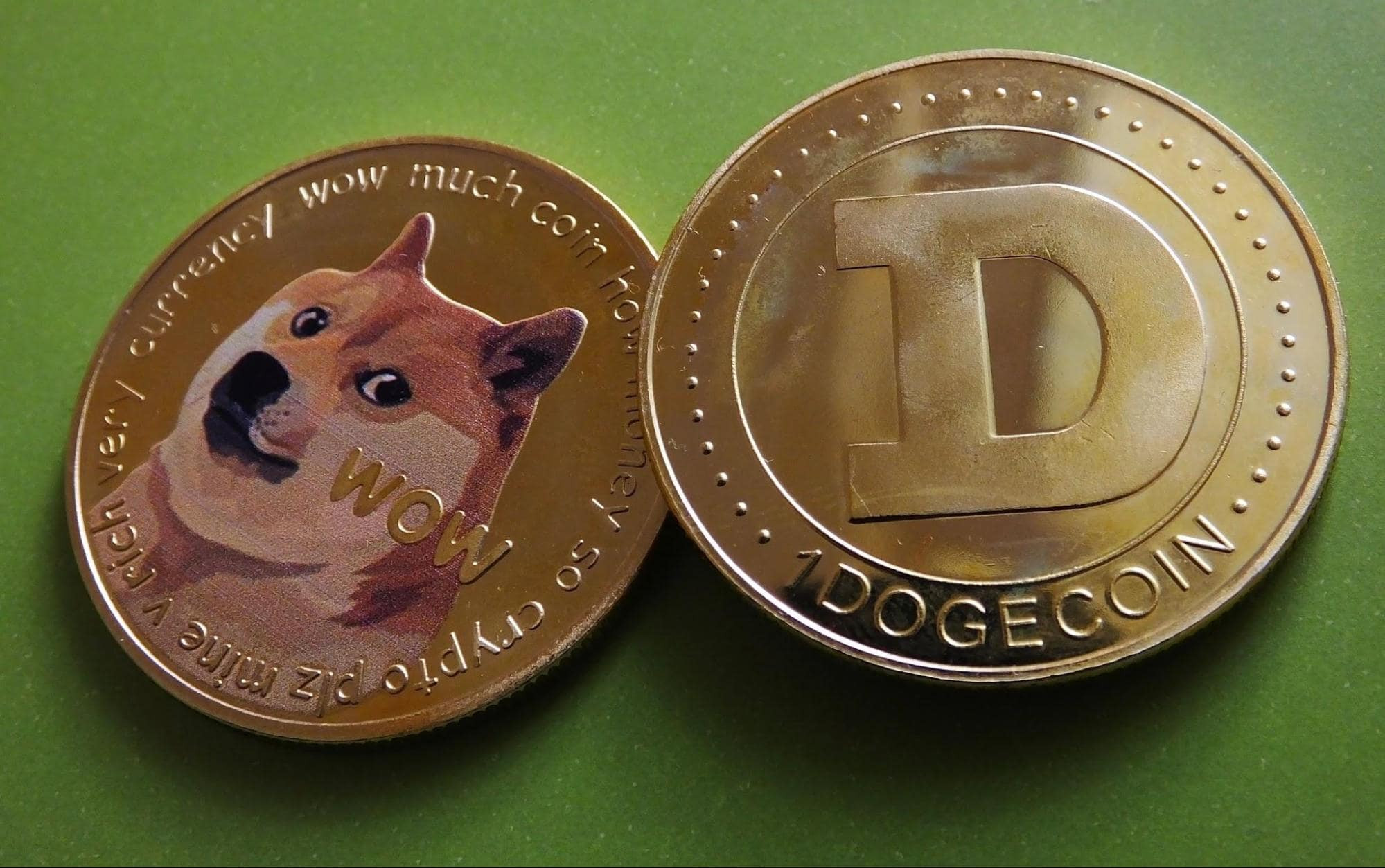
Dogecoin (DOGE) is a decentralized cryptocurrency based on blockchain technology that was launched in December 2013 as a parody of Bitcoin and the crypto boom of that time. Its creators, Billy Markus and Jackson Palmer, wanted to build a “fun” cryptocurrency that would be more friendly and accessible to everyday users, unlike the more “serious” Bitcoin. The project was inspired by the popular Doge internet meme, featuring a Shiba Inu dog and humorous broken-English captions such as “much wow,” “such crypto,” and “very currency.”
From a technical standpoint, Dogecoin is a fork of Litecoin, which itself is based on the Bitcoin codebase. This means DOGE uses the Proof-of-Work (PoW) consensus algorithm, but with several important differences. Unlike Bitcoin, which has a hard cap of 21 million coins, Dogecoin follows an inflationary supply model. A new block is generated every minute with a fixed reward of 10,000 DOGE, making the total supply theoretically unlimited. As of early 2026, more than 147 billion DOGE tokens are already in circulation.
Dogecoin
Despite its meme-driven origins, Dogecoin has evolved into a fully functional payment network with a real market capitalization exceeding $25 billion, placing it among the top 10 cryptocurrencies globally. As of January 2026, the DOGE price is fluctuating in the $0.15–0.17 range, showing a clear V-shaped recovery after a market correction. Today, Dogecoin is actively used for social media tipping, charitable donations, microtransactions, and is even accepted as a payment method by several major companies.
The defining strength of Dogecoin is its exceptionally powerful community. More than 6 million crypto wallets hold DOGE, while the Reddit community alone includes around 2.7 million members. DOGE users are widely known for their high social media engagement, charitable initiatives, and support of various community-driven projects. It is this collective momentum that transformed a “joke coin” into a serious financial asset, attracting institutional investors who have already invested over $600 million in Dogecoin.
Description and Key Features
Dogecoin operates on its own blockchain, which was created as a fork of Litecoin with significant parameter modifications. The network is based on the Scrypt hashing algorithm, which—unlike Bitcoin’s SHA-256—was originally more resistant to ASIC mining (although dedicated Scrypt ASIC miners now exist). One of Dogecoin’s key technical advantages is its block generation time: a new block is produced every 1 minute, which is significantly faster than Bitcoin’s 10 minutes and even Litecoin’s 2.5 minutes. As a result, transactions are confirmed much more quickly, making DOGE well suited for everyday payments and microtransactions.
The Dogecoin community has repeatedly supported fundraising for charitable causes.
One of Dogecoin’s defining characteristics is its inflationary economic model. Each new block rewards miners with 10,000 DOGE, and this reward is fixed. With a new block generated every minute, this results in approximately 14.4 million new coins per day, or about 5.26 billion DOGE per year. Given that more than 147 billion tokens are already in circulation, the annual inflation rate is around 3.5% and gradually decreases as the total supply grows. This model was chosen deliberately: continuous issuance encourages the use of DOGE for transactions rather than pure long-term holding (hodling) and ensures steady miner incentives to maintain network security.
Transaction fees on the Dogecoin network are another major advantage. The average fee typically ranges from about 0.1 to 1 DOGE, which at a price of $0.15–0.17 amounts to just a few cents. This makes DOGE an ideal tool for online tipping, microtransactions, and small-value transfers, where using Bitcoin or Ethereum would be economically impractical due to higher fees. Transaction processing speed is also notable — the first confirmation usually occurs within one minute, and for full confidence, around six confirmations are sufficient, taking roughly six minutes in total.
Core Technical and Functional Features of Dogecoin:
Fast block times: a new block is generated every minute, ensuring high transaction speed
Low transaction fees: average fees of around 0.1–1 DOGE (just a few cents) make the coin ideal for microtransactions
Scrypt algorithm: a more accessible mining algorithm compared to SHA-256
Inflationary supply model: continuous issuance of 10,000 DOGE per block encourages spending rather than hoarding
Merge mining with Litecoin: miners can mine DOGE and LTC simultaneously, increasing overall network security
Large circulating supply: more than 147 billion coins in circulation makes DOGE widely accessible and psychologically appealing to beginners
Ease of use: user-friendly wallets and simple mechanics make Dogecoin easy to understand for new users
Active community: over 6 million wallets and 2.7 million Reddit members actively support and grow the ecosystem
Doge-Ethereum
History of Origin
The story of Dogecoin began in late 2013, when two programmers from opposite sides of the world decided to poke fun at the cryptocurrency craze of the time. Jackson Palmer, a marketing specialist at Adobe Systems in Australia, sarcastically tweeted in November 2013 that he was investing in Dogecoin — a cryptocurrency that did not even exist at that moment. He simply combined two major trends: the explosive growth of cryptocurrencies and the viral Doge meme featuring a Shiba Inu dog named Kabosu. The dog became an internet sensation thanks to her skeptical facial expression and humorous broken-English captions like “much wow,” “so amaze,” and “very crypto.”
Jackson Palmer
The joke caught on so well that Palmer purchased the domain dogecoin.com and placed the Shiba Inu logo against a coin-themed background. A few days later, Billy Markus, a programmer at IBM in the U.S. who was experimenting with creating his own cryptocurrency, noticed it. Markus reached out to Palmer, and within just a few hours, they created a working version of Dogecoin based on the Litecoin code, adjusting the emission parameters and adding the meme-inspired design. On December 6, 2013, Dogecoin was officially launched.
The success exceeded all expectations. Just two weeks after launch, dogecoin.com had reached one million visits, and the coin’s price surged by 300% in the first 72 hours. The Reddit community grew exponentially, with users adopting DOGE for tipping helpful comments and posts — a practice that became a hallmark of the coin. Unlike many serious crypto projects, the atmosphere around Dogecoin was friendly, fun, and inclusive — exactly what its creators had envisioned.
In 2014, the DOGE community gained fame for its charitable initiatives. Users raised $30,000 in Dogecoin to sponsor the Jamaican bobsled team’s participation in the Sochi Winter Olympics. They then funded the construction of a water well in Kenya through the Doge4Water charity, raising $30,000 in just a few days. The pinnacle of Dogecoin’s early publicity came with sponsoring NASCAR driver Josh Wise — his car proudly displayed a giant Dogecoin logo, bringing massive media attention to the coin in the United States.
DOGE
Worth Noting! The real explosive growth began in 2021, when Elon Musk started regularly tweeting about Dogecoin, calling himself the “Dogefather.” His tweets sent the coin’s price soaring — in May 2021, DOGE reached an all-time high of $0.73, with a market capitalization exceeding $88 billion. What began as a joke had transformed Dogecoin into a top-5 cryptocurrency by market cap. Since then, DOGE has experienced several cycles of growth and decline but has maintained its position in the TOP 10 CRYPTOCURRENCIES, proving that community strength and viral marketing can create real value—even from a meme.
DOGE User Community
If there’s one thing that truly sets Dogecoin apart from thousands of other cryptocurrencies, it’s its community. As of 2026, the DOGE ecosystem includes over 6 million active crypto wallets, making it one of the most widely held cryptocurrencies in the world. On Reddit alone, the r/dogecoin community boasts 2.7 million subscribers who discuss news, share memes, and support newcomers daily. Unlike many crypto communities dominated by toxicity and aggressive tribalism, the atmosphere around Dogecoin remains friendly, fun, and inclusive — exactly as its creators intended.
The Dogecoin phenomenon cannot be discussed without mentioning Elon Musk, who has become the coin’s unofficial ambassador. The CEO of Tesla and SpaceX regularly tweets about DOGE, calling himself the “Dogefather,” and his posts consistently trigger instant price spikes. Musk’s involvement is more than just a joke — he genuinely sees Dogecoin’s potential as a medium for everyday transactions due to its low fees and high speed. Tesla even accepts DOGE for certain items in its online store. Support from such an influential entrepreneur has drawn attention not only from retail investors but also from institutional players, who have already invested over $600 million in Dogecoin.
Elon Musk
The DOGE community is active across all major platforms — from Twitter and Reddit to TikTok and Discord. Users create memes, educational content, and organize online events and meetups. The social media “tipping” system, where people reward each other with small amounts of DOGE for helpful content or good jokes, has become an integral part of the culture. This fosters a unique ecosystem in which the cryptocurrency is used not only as an investment asset but also as a means of social interaction. It is this vibrant, engaged audience that transformed a “meme coin” into a serious project with a multi-billion-dollar market capitalization and genuine growth potential.
Unique Features of Dogecoin
What sets Dogecoin apart from hundreds of other cryptocurrencies on the market? First and foremost, it’s the creators’ deliberate choice of an inflationary economic model. While Bitcoin is capped at 21 million coins and becomes increasingly scarce over time, Dogecoin has an unlimited supply with a fixed issuance of 10,000 DOGE per block. This translates to about 5.26 billion new coins each year, which, given the current circulation of over 147 billion, results in an annual inflation rate of around 3.5% that gradually decreases over time. This model makes DOGE an ideal transactional currency — it encourages spending and usage rather than simply holding in anticipation of price appreciation. The steady miner rewards also ensure long-term network security without relying solely on transaction fees.
In 2014, 67.8 million DOGE (about $55,000 at the 2014 exchange rate) was raised to sponsor NASCAR race car driver Josh Wise.
Technologically, Dogecoin uses merge-mining with Litecoin, meaning miners can simultaneously mine both coins without extra computational effort. This feature, introduced in 2014, was a breakthrough for the security of the DOGE network. Thanks to merged mining, Dogecoin’s hash rate increased significantly, protecting the network from 51% attacks (where a malicious actor controls more than half of the computing power). Miners receive rewards in both currencies, making the process economically attractive and helping maintain blockchain stability.
The psychological factor also plays a huge role in Dogecoin’s success. Its large circulating supply makes DOGE accessible to newcomers — with just a few dollars, one can buy hundreds or even thousands of coins, which feels more satisfying than owning tiny fractions of Bitcoin. With a price in cents ($0.15–0.17 as of early 2026), DOGE appears approachable and offers a perceived “room for growth” for everyday users. Its meme nature and the friendly Shiba Inu logo lower the entry barrier — people don’t feel intimidated by a “serious” cryptocurrency and instead see DOGE as fun and easy to understand.
Transaction speed and minimal fees are key reasons many choose Dogecoin for real payments. Blocks are generated every minute, which is 10 times faster than Bitcoin and 2.5 times faster than Litecoin. Average fees range from 0.1–1 DOGE, literally just a few cents. Try sending a $5 tip over the Bitcoin network with a $10–20 fee, and you’ll understand why DOGE has become so popular for microtransactions, donations, and transfers between friends. This practicality transforms the coin from a purely speculative asset into a real medium of exchange.
Doge internet meme
Key Unique Features of Dogecoin:
Inflationary issuance: the continuous creation of 10,000 DOGE per block encourages use as a currency rather than merely a store of value
Merge-mining with Litecoin: dual rewards for miners ensure a high hash rate and strong network security
Ultra-fast blocks: 1-minute block generation compared to Bitcoin’s 10 minutes makes transactions nearly instantaneous
Microscopic fees: average costs of 0.1–1 DOGE (2–17 cents) are ideal for tipping and microtransactions
Meme culture: a friendly image and humor make the cryptocurrency accessible to the general public, not just technical enthusiasts
Institutional support: over $600 million invested by major players and a 60–70% likelihood of DOGE ETF approval in 2026
Celebrity endorsement: Elon Musk’s tweets and his “Dogefather” status attract media attention and new users
Massive supply: 147+ billion coins lower the psychological entry barrier — anyone can own hundreds of DOGE
Proven technology: more than 13 years of operation without critical failures or hacks demonstrate the blockchain’s reliability
DOGE Tokenomics
Dogecoin’s tokenomics are fundamentally different from most cryptocurrencies, reflecting its philosophy as a “people’s currency.” Unlike Bitcoin, which has a hard cap of 21 million coins, Dogecoin has no maximum supply — its issuance is theoretically infinite. Each block, generated roughly every minute, rewards miners with a fixed 10,000 DOGE. This results in about 14.4 million new coins created daily, or approximately 5.256 billion DOGE annually. As of January 2026, around 147–152 billion tokens are in circulation, giving an annual inflation rate of roughly 3.5–3.85%.
What is Dogecoin?
A key feature of Dogecoin’s tokenomics is the absence of any pre-mining, ICOs, or token sales. All 100% of coins are distributed exclusively through the Proof-of-Work mining process, making the initial issuance as fair and decentralized as possible. Miners earn block rewards plus transaction fees, although the latter are minimal due to DOGE’s low network fees.
However, there is a nuance regarding token concentration. As of 2024–2025, the top 10 largest wallets control roughly 45–46% of all DOGE in circulation. The single largest address holds about 31.89 billion tokens, approximately 22% of the circulating supply. This raises some concerns about centralization and potential price manipulation — if one or two large holders (“whales”) decide to sell, the price could drop sharply within hours. That said, part of these holdings belongs to exchanges, which store users’ tokens rather than a single owner.
Dogecoin
As of early 2026, Dogecoin’s market capitalization stands at around $24–25 billion, keeping the coin among the top 10 cryptocurrencies by this metric. At the current price of approximately $0.15–0.17, reaching the psychologically significant $1 per DOGE would require a market capitalization of at least $147–152 billion — roughly a sixfold increase from current levels.
Parameter
Value
Current Circulating Supply
~147–152 billion DOGE
Maximum Supply
Unlimited (inflationary model)
Block Reward
10,000 DOGE
Block Generation Time
~1 minute
Daily Issuance
~14.4 million DOGE
Annual Issuance
~5.256 billion DOGE
Current Annual Inflation
~3.5–3.85%
Market Capitalization
~$24–25 billion
Current Price (January 2026)
$0.15–0.17
Top 10 Wallets Concentration
~45–46% of supply
Distribution Mechanism
100% via PoW mining, no pre-mine or ICO
Consensus Algorithm
Proof-of-Work (Scrypt) with merge-mining
24h Trading Volume
~$1.6 billion
Ways to Use DOGE
Dogecoin has long moved beyond being just a speculative meme and has evolved into a functional payment method with real-world use cases. Its main advantage is microscopic transaction fees of 0.1–1 DOGE (literally just a few cents) combined with fast transaction speeds thanks to 1-minute block times. This makes DOGE an ideal tool for everyday payments, where using Bitcoin or Ethereum would be economically impractical due to high network fees.
Tips and Donations on Social Media — This classic use case is where it all began. In 2014, Reddit and Twitter bots were introduced, allowing users to send DOGE as a token of appreciation for helpful content, witty comments, or support. The tipping system became a hallmark of the community — instead of meaningless likes, users reward each other with real money, even if small amounts. Today, this practice has expanded to YouTube, Twitch, Discord, and other platforms, where content creators accept DOGE donations.
Online Shopping and E-Commerce — Another popular use case. Tesla, Elon Musk’s company, accepts Dogecoin for merchandise in its official store, setting an important precedent for broader adoption. Beyond Tesla, various online retailers selling electronics, clothing, gift cards, and digital goods also accept DOGE. Payment processors like BitPay and CoinPayments have integrated Dogecoin, enabling thousands of merchants worldwide to accept the cryptocurrency without technical barriers.
Charity and Crowdfunding — The DOGE community takes particular pride in this. Dogecoin’s history is full of examples of large-scale charitable campaigns, from sponsoring the Jamaican bobsled team to building wells in Africa. Its low entry barrier (donations as small as $1–2 with minimal fees) makes DOGE an excellent fundraising tool. Many charitable organizations and independent projects leverage Dogecoin for crypto-based fundraising.
Peer-to-Peer Transfers — A simple yet highly practical use case. Need to send a friend $20 for pizza or repay a relative abroad? DOGE can handle it in a minute with just a few cents in fees, whereas traditional bank transfers can take days and eat up 5–10% of the amount. This is especially relevant for international transfers, where systems like Western Union charge steep fees.
Merge-Mining — A way to earn for those already mining Litecoin. With merged mining, LTC and DOGE can be mined simultaneously without extra energy or hardware costs, making DOGE mining a profitable addition for those with existing equipment.
Trading and Investment — Many also use DOGE as a speculative asset. The coin’s volatility and Elon Musk’s influence create opportunities for short-term trading. Institutional investors have already poured over $600 million into Dogecoin, and the potential approval of a DOGE ETF (estimated 60–70% chance in 2026) attracts even more capital.
Gaming and Metaverses — A growing niche for DOGE adoption. Some online games, NFT projects, and virtual worlds are beginning to integrate DOGE as in-game currency or for purchasing digital assets. Its low fees make the coin ideal for microtransactions in games, where users may perform dozens of operations daily
MyDoge Wallet
Dogecoin Trading
Trading Dogecoin is a unique art form, where technical analysis often takes a back seat to “meme magic” and Elon Musk’s tweets. DOGE remains one of the most volatile cryptocurrencies in the top 10, creating both significant earning opportunities and serious risks for unprepared traders. As of early 2026, DOGE’s 24-hour trading volume is around $1.6 billion, providing excellent liquidity across major exchanges.
Dogecoin’s volatility is driven by specific factors. Chief among them are Elon Musk’s tweets and statements — when the “Dogefather” posts about DOGE, the price can surge or drop 10–20% within minutes. This creates a unique scenario where traders must monitor not only charts but also the billionaire’s Twitter feed. Historically, every mention of DOGE by Musk has resulted in an average short-term price increase of 15–30%, though this effect has slightly diminished over time.
Technical analysis works on DOGE, but with caveats. The coin exhibits classic patterns — support and resistance levels, triangles, flags — but these are often disrupted by external factors like crypto industry news or broader Bitcoin trends. As of early 2026, DOGE trades around $0.15–0.17, showing a V-shaped recovery after a correction. Some analysts note an oversold condition on the RSI indicator, hinting at a potential rebound.
Dogecoin Trading
Correlation with Bitcoin is an important consideration for traders. Like most altcoins, Dogecoin tends to follow Bitcoin’s movements but with higher amplitude. When BTC rises by 5%, DOGE can surge 10–15%; when Bitcoin drops 10%, DOGE can fall 15–25%. This beta above one makes DOGE attractive for aggressive traders but risky for conservative investors.
Trading strategies range from scalping to swing trading. Scalpers use 1–5 minute charts, capturing small moves of 1–3% multiple times per day. Thanks to DOGE’s high trading volume and volatility, this is entirely feasible. Day traders prefer hourly and 4-hour timeframes, trading intraday movements of 5–10%. Swing traders hold positions for several days to weeks, aiming to catch larger waves of 20–50%.
Risk management is critical when trading meme coins. A standard rule is not to risk more than 1–2% of your account per trade, always use stop-loss orders, and avoid succumbing to FOMO (fear of missing out). Stories of traders making 1000% on DOGE attract newcomers but often omit the thousands who lost money on emotional buying at highs and panic-selling at lows.
Seasonality and market cycles also affect the price. DOGE performs best during bull markets, when retail investors actively enter crypto. In bear markets, the coin can lose 70–80% from peak levels, as seen in 2022–2023. Interestingly, DOGE often gains momentum during meme culture hype or when Elon Musk makes another high-profile move, such as a SpaceX launch or news about Tesla accepting DOGE.
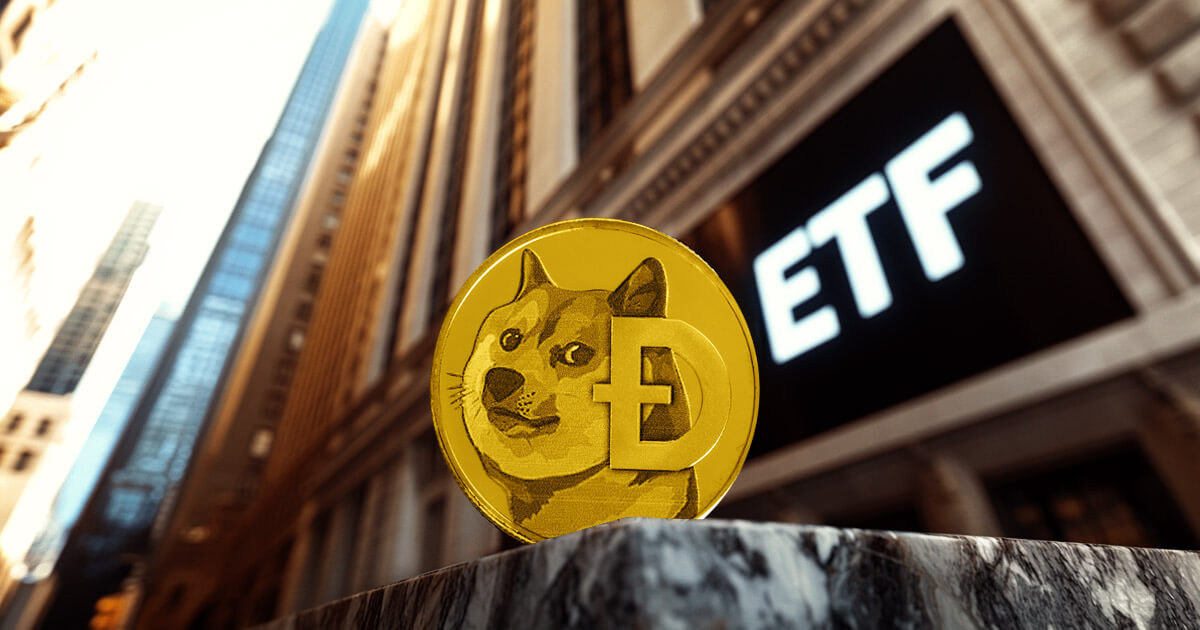
Dogecoin ETF
Note! Derivative instruments for DOGE are also available. On major exchanges like BINANCE, BYBIT, and OKX, traders can access Dogecoin futures with leverage of up to 50–125x, significantly amplifying both potential profits and risks. In early 2026, the first 2x leveraged DOGE ETFs also appeared, delivering impressive results. However, leveraged trading requires experience and strict discipline — a single wrong move can liquidate an entire position.
How and Where to Buy Dogecoin?
Buying Dogecoin in 2026 is easier than ordering a pizza — the coin is available on nearly all major cryptocurrency exchanges and supports dozens of trading pairs. For beginners, the process is straightforward: register on an exchange, complete identity verification (KYC), fund your account with fiat or crypto, and purchase DOGE. The entire process takes anywhere from 10 minutes to a few hours, depending on verification speed.
Binance — the world’s largest crypto exchange by trading volume, offering DOGE with very high liquidity. Available trading pairs include DOGE/USDT, DOGE/BTC, DOGE/EUR, and more, along with leveraged futures. Fees are competitive at around 0.1% per spot trade, making Binance an optimal choice for traders. The platform supports deposits via bank cards, P2P transfers, and dozens of other methods.
Bybit — popular among derivatives traders, offering not only DOGE spot trading but also a wide range of high-leverage futures contracts. Bybit is notable for publishing detailed DOGE forecasts for 2026–2031. The platform is known for its user-friendly interface, fast order execution, and generous bonuses for new users.
OKX — another top exchange with a vast array of trading instruments for DOGE. In addition to classic spot and futures trading, OKX offers options, structured products, and even staking-like services (although DOGE technically does not support staking, some exchanges provide lending-based alternatives). OKX is known for low fees and an advanced trading terminal for professionals.
MEXC — an exchange rapidly gaining popularity due to its wide selection of altcoins and low fees. DOGE is available for both spot and futures trading. MEXC often runs promotions with zero-fee trading on certain pairs, attracting active traders.
BingX — a relatively young but fast-growing platform focused on copy trading. Users can buy DOGE themselves or replicate trades of successful traders, which is convenient for beginners.
WEEX — a lesser-known but reliable exchange offering competitive conditions for Dogecoin trading. Particularly appealing to users who value anonymity and minimal verification requirements.
Buy Dogecoin on the exchange
Key tips for buying DOGE: Always enable two-factor authentication (2FA) to protect your account. Start with small amounts to familiarize yourself with the platform interface. Avoid keeping large sums on exchanges — transfer your DOGE to personal wallets, such as Dogecoin Core or a hardware wallet like Ledger. For long-term storage, cold wallets are recommended, while funds intended for active trading can remain on the exchange for quick access. Pay attention to withdrawal fees — some exchanges charge a fixed fee of 2–5 DOGE, which can be significant for small transactions.
Common Misconceptions About Dogecoin (DOGE)
“Dogecoin is just a joke with no real value” — perhaps the most widespread misconception, easily refuted by facts. Yes, the coin started as a parody, but over 13 years it has become a fully functional cryptocurrency with a market capitalization of $24–25 billion. Over 6 million wallets hold DOGE, institutional investors have poured more than $600 million, and companies like Tesla accept it as payment. Market capitalization doesn’t lie — when billions of dollars are invested in an asset, it’s no longer just a meme.
“Infinite inflation will kill DOGE’s value” — a common myth among Bitcoin maximalists. The reality: Dogecoin’s annual inflation is around 3.5–3.85% and gradually decreases as a percentage of total supply. In 10 years, it’s expected to drop to about 2.6%, and in 30 years to roughly 1.7%. By comparison, U.S. dollar inflation has ranged from 2% to 8% in recent years. DOGE’s moderate inflation is not only harmless but beneficial — it encourages usage as a medium of exchange rather than hoarding and provides continuous rewards for miners to secure the network.
“DOGE has no real use cases” — another misconception easily debunked. With fees of just 0.1–1 DOGE (a few cents) and 1-minute block times, the coin is ideal for micropayments, social media tipping, international transfers, and online purchases. Tesla accepts DOGE, thousands of merchants integrate it via payment processors, and the community actively uses it for charity and crowdfunding. A daily trading volume of $1.6 billion demonstrates real liquidity and demand.
“Dogecoin is backed only by Elon Musk” — an oversimplification. Yes, the “Dogefather” tweets influence the price, but DOGE’s core success comes from a massive community of 2.7 million Reddit members and millions of active users worldwide. The coin existed and grew long before Musk’s first tweet in 2021. Merge-mining with Litecoin, low fees, fast transactions, and fair mining distribution make DOGE a viable project independently of any single person.
“DOGE will inevitably reach $1, $10, or even $100” — a dangerous misconception that misleads newcomers. Reaching $1 with the current supply of 147–152 billion coins would require a market capitalization of at least $147–152 billion, about six times the current level. It’s possible, but not guaranteed. $10 would imply a market cap of $1.47–1.52 trillion — more than Bitcoin at its peak in 2021. Invest wisely, without relying on unrealistic YouTube or Twitter predictions.
“All DOGE tokens are concentrated in a few whales” — partially true, but with nuances. Indeed, the top 10 addresses control around 45–46% of the circulating supply. However, many of these addresses belong to exchanges like Binance, Coinbase, and Robinhood, which hold tokens for millions of users rather than a single individual. It’s not a decentralized ideal, but it’s also not a monopoly of a few people.
“Dogecoin is technologically outdated” — a debatable claim. Yes, its core code is based on Litecoin from 2013, but it has operated reliably for over 13 years without critical failures. Transaction speed, low fees, and stability matter more than trendy features like smart contracts. DOGE fulfills its purpose — providing a simple, fast, and inexpensive medium of exchange — better than many modern blockchains.
Conclusion
Dogecoin is a remarkable example of how internet culture, a strong community, and a fortunate confluence of events can turn a joke into a multi-billion-dollar project. What began in 2013 as a parody of the cryptocurrency craze has evolved into a serious financial asset with a market capitalization of over $24–25 billion, consistently ranking among the top 10 cryptocurrencies worldwide. More than 6 million wallets hold DOGE, and the Reddit community of 2.7 million members continues to actively support the project.
Dogecoin’s uniqueness lies not in revolutionary technology, but in its philosophy and practicality. Its inflationary model, with an annual issuance of around 3.5%, encourages the coin’s use for transactions rather than speculative hoarding. Microscopic fees of just a few cents and one-minute block times make DOGE an excellent medium for everyday payments, tipping, donations, and international transfers. It provides a functional solution for use cases where expensive and slow networks like Bitcoin or Ethereum are less practical.
Dogecoin review
The outlook for Dogecoin in 2026 looks intriguing. Institutional investors have already poured over $600 million into the project, and the chances of a DOGE ETF approval are estimated at 60–70%, potentially opening the door to a new wave of institutional capital. Continued support from Elon Musk, adoption by Tesla and other companies, and an active, engaged community create a positive backdrop. At the current price of around $0.15–0.17, the coin is showing a V-shaped recovery after a correction, though it remains far from the psychologically significant $1 mark.
It’s important to understand that Dogecoin is a high-risk asset with significant volatility. The concentration of 45–46% of tokens among the top 10 addresses, market sentiment dependency, and the influence of individual figures make investing in DOGE speculative. Yet, it is precisely this volatility and meme-driven nature that create opportunities for profit, attracting millions of traders and investors worldwide.
Dogecoin has proven that in the crypto industry, community strength and the virality of an idea can matter more than technological perfection. The coin with the Shiba Inu logo has evolved from an internet joke into a serious financial instrument used for real payments and investments. Will DOGE continue to grow? Only time will tell. One thing is certain—Dogecoin has secured its place in crypto history as a phenomenon that reshaped the perception of what gives a digital asset its value.
FAQ. Frequently Asked Questions
Why does Dogecoin have an unlimited supply, and won’t this devalue the coin?
Dogecoin indeed has an inflationary model with no maximum supply, but this is a conscious choice by its creators, not a flaw. Each block gives a fixed reward of 10,000 DOGE, resulting in an annual issuance of about 5.26 billion coins. With a circulating supply of 147–152 billion tokens, the annual inflation is around 3.5–3.85% and gradually decreases as a percentage over time. In 10 years, it will drop to 2.6%, and in 30 years — to 1.7%. For comparison, U.S. dollar inflation fluctuates between 2% and 8%, so DOGE’s moderate inflation is reasonable. Moreover, continuous issuance encourages using the coin for transactions and ensures miners receive ongoing rewards to secure the network, which is critical for long-term blockchain security.
Can Dogecoin reach $1 or even $10?
Reaching the psychological $1 mark per DOGE is technically possible but would require a significant increase in market capitalization. With the current supply of 147–152 billion coins, $1 per DOGE would mean a market cap of at least $147–152 billion, about 6 times the current $24–25 billion. This would require massive capital inflows, potentially through a DOGE ETF approval (estimated 60–70% chance in 2026) or widespread corporate adoption. A $10 price would imply a market cap of $1.47–1.52 trillion — higher than Bitcoin at its 2021 peak — which is extremely unlikely in the foreseeable future. Investors should maintain realistic expectations and not blindly follow hype from social media.
Is the Dogecoin network secure, and can it be hacked?
Dogecoin uses the Proof-of-Work consensus with Scrypt hashing and merge-mining with Litecoin, providing a high level of security. Merge-mining significantly increased the DOGE network hashrate since LTC miners can mine both coins simultaneously without extra cost. This protects the blockchain from 51% attacks, where an attacker controls over half the network’s computing power. Over 13+ years, Dogecoin has not experienced critical hacks or major blockchain failures, confirming its technological reliability. Users should still follow basic security measures: use secure wallets, enable two-factor authentication on exchanges, and avoid storing large amounts on online platforms.
What is the difference between Dogecoin and Bitcoin?
Dogecoin and Bitcoin differ fundamentally in philosophy and technical parameters. Bitcoin is positioned as “digital gold” with a fixed supply of 21 million coins and a 10-minute block time, whereas Dogecoin was created as a “people’s currency” for everyday transactions with unlimited issuance and 1-minute blocks. DOGE uses Scrypt instead of SHA-256, making it initially more accessible for home mining. Transaction fees on Dogecoin are tiny (0.1–1 DOGE), whereas Bitcoin fees can reach $10–50 during network congestion. Bitcoin is a serious financial asset for long-term accumulation and institutional investment, while DOGE is a light, friendly medium of exchange with a strong community and meme culture. Both projects have their place and serve different roles in the crypto ecosystem.
Is it worth investing in Dogecoin in 2026?
Investing in Dogecoin is high-risk and requires sober assessment. On the one hand, the project has solid fundamentals: market cap over $24–25 billion, more than 6 million wallets, $600+ million in institutional investments, and a 60–70% chance of ETF approval. Support from Elon Musk, adoption by Tesla, and an active community create a positive backdrop. On the other hand, 45–46% of tokens are concentrated among the top 10 addresses, and price volatility and market sentiment dependence make DOGE speculative. At $0.15–0.17, the coin is recovering, but historical highs of $0.73 are still far. Standard advice: invest only what you can afford to lose, diversify your portfolio, and avoid emotional decisions. Dogecoin can yield significant profits, but like any high-risk crypto, it can also wipe out your investment.
Crypto market expert. A practicing investor in financial and cryptocurrency markets with over 9 years of experience.
Specializations: cryptocurrencies, DeFi tools, crypto exchanges, and exchangers.
I participate in token sales, earn through holding, staking, and DeFi tools. I actively trade on crypto exchanges, test various cryptocurrency services, and share my knowledge with the website's readers. Always up to date with current events and well-versed in the latest trends in the cryptocurrency industry.